Marco Teglia

Marco Teglia

Junior Technical Designer, Gameplay Systems & Prototyping

I build systems where sound is part of the mechanic.

Click a cell to add or remove a note. A small instrument using the rule from Sonoboros.

My bachelor’s thesis in Game Design, 2026

Beyond visual realism

Sound architectures and digital synesthesia for flow state induction. Interaction Design degree, Game Design track, Quasar Institute for Advanced Design, Rome, March 2026. Supervisor: Furio Valitutti.

The industry tends to treat immersion as a matter of photorealism. My thesis argues for a different route: tight synchronisation between sound, image and input can hold a player's attention more directly than visual detail.

The cube maps three kinds of immersion. Photorealism pushes one axis; audio-reactivity and musical emotion move along the diagonal, where all three meet. Try both routes.

Five ideas behind the games
  • Temporal binding window. Sight and sound fuse into one event when they arrive within about 40–60 ms of each other.
  • Perceptual load (Lavie). A visually busy scene can make players miss sounds, so keep the screen sparse at speed.
  • ITPRA (Huron). Expectation has stages: imagination, tension, prediction, reaction, appraisal. Music can be arranged to play on each.
  • Frisson. The chill a musical climax gives can carry emotion where a game has no story.
  • Ma. The Japanese idea of meaningful pause. Silence gives the next note its weight.

The full thesis is in Italian, 61 pages. Ask me for a copy.

The immersion cube A cube whose three axes are sensory, challenge-based and imaginative immersion. A line runs from the origin to the far corner, labelled maximum presence. Sensory Challenge Imaginative Maximum presence (1, 1, 1)
The immersion cube, after Nilsson, Nordahl and Serafin (2016): three kinds of immersion as its axes.

Built on the thesis

Two games that put the thesis to the test: first the prototype for the thesis, then the same idea taken further.

Beat Rider

From the thesis: quantized input, Huron’s ITPRA model of expectation, and a sparse screen at speed so the music keeps your attention.
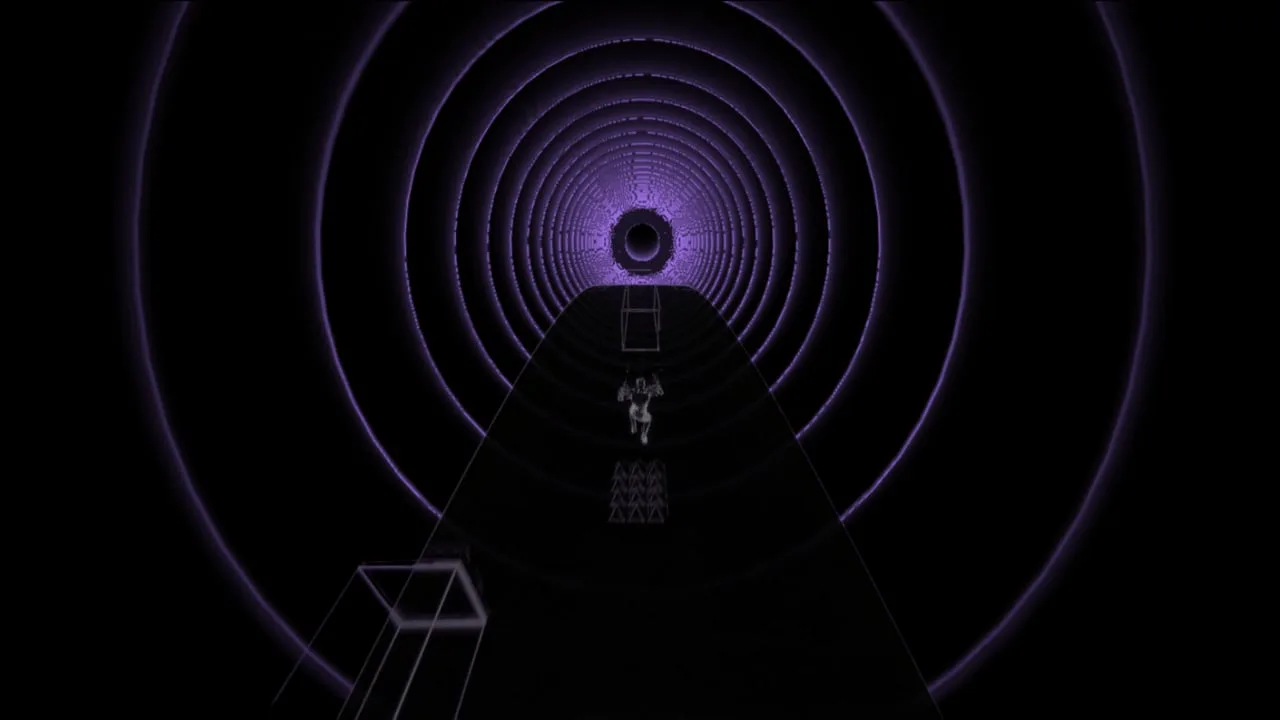
Beat Rider gameplay: a wireframe runner inside a neon triangle tunnel.
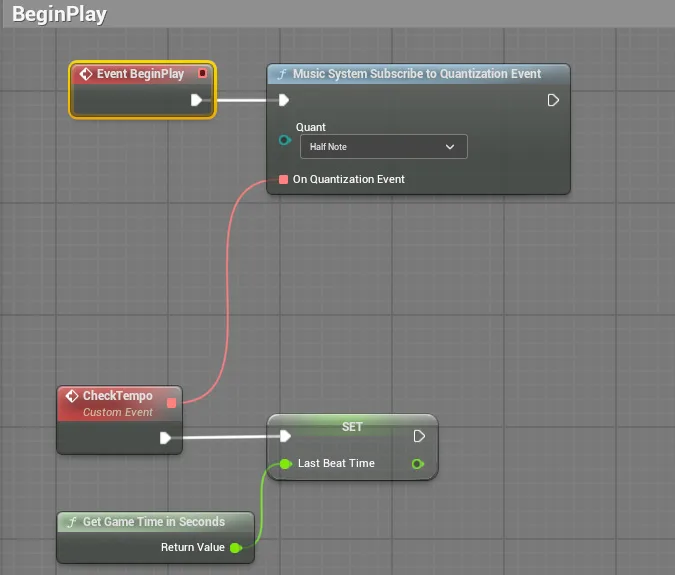
Unreal Blueprint: a quantization event from Reactional Music updates a Last Beat Time variable.
Input quantization in Blueprints
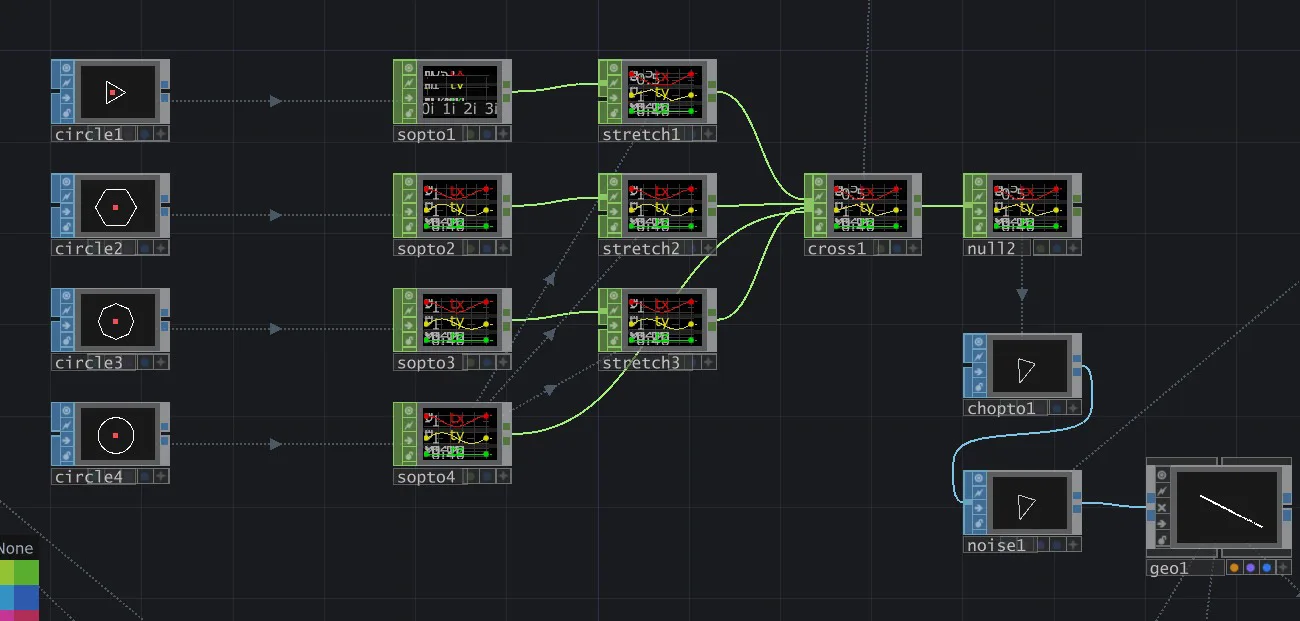
TouchDesigner network that builds the tunnel geometry from audio spectrum data.
The tunnel, generated in TouchDesigner

An audio-reactive runner, built as the practical half of my thesis on flow. You switch lanes, jump and slide, and every action lands on the beat.

Role
Solo, graduation project
Built with
Unreal Engine 5 (Blueprints), Reactional Music, TouchDesigner
Year
2025–26

Design decisions

  • Action sounds are quantized: they wait for the next beat instead of firing on the key press, so even a slightly late press sounds right.
  • The track carries lines of light spaced at 60 / BPM × player speed. At 87 BPM you cross one line per beat, so you see the rhythm before you hear it.
  • Wireframe and neon only. At high speed, less visual detail keeps obstacles readable and leaves attention for the music.
  • I remixed the soundtrack around Huron's ITPRA model of expectation: a long build of tension, a silent break, then the drop.
Sonoboros

From the thesis: one clock for sound and image, inside the 40–60 ms window where the brain binds them, and a playtest mode built to measure it.

The snake grows, curls round and bites its own tail. Its notes play back as an arpeggio, and on the next downbeat the loop explodes into a chord. Played by the game's auto-player. Turn the sound on to hear it.

Snake, rebuilt as a sequencer. Every turn the snake makes is a note, and its body plays those notes back as an echo while it moves.

Role
Designed and directed, built with AI-assisted coding
Built with
JavaScript, Web Audio API, Canvas
Year
2026
Status
Vertical slice, one song

Design decisions

  • In Snake, running into your own body ends the game. Here, catching the very tip of your tail closes the loop, and its shape becomes a chord: how round the loop is decides whether the chord resolves or stays suspended. Hitting the body anywhere else still costs a life.
  • Dying never stops the music. You respawn on the next bar, so the song is the unit of play, not the run.
  • Sound and image run on one clock. Game logic decides 40 ms ahead and drawing follows what you hear, so feedback stays inside the window where the brain binds sight and sound.
  • A playtest mode tests the thesis: players play four versions that differ only in sound timing (in sync or delayed, notes snapped to the beat or not), in a balanced order, and rate each one. The answers export ready for a statistical comparison.

Other work

Nonna's Pantry

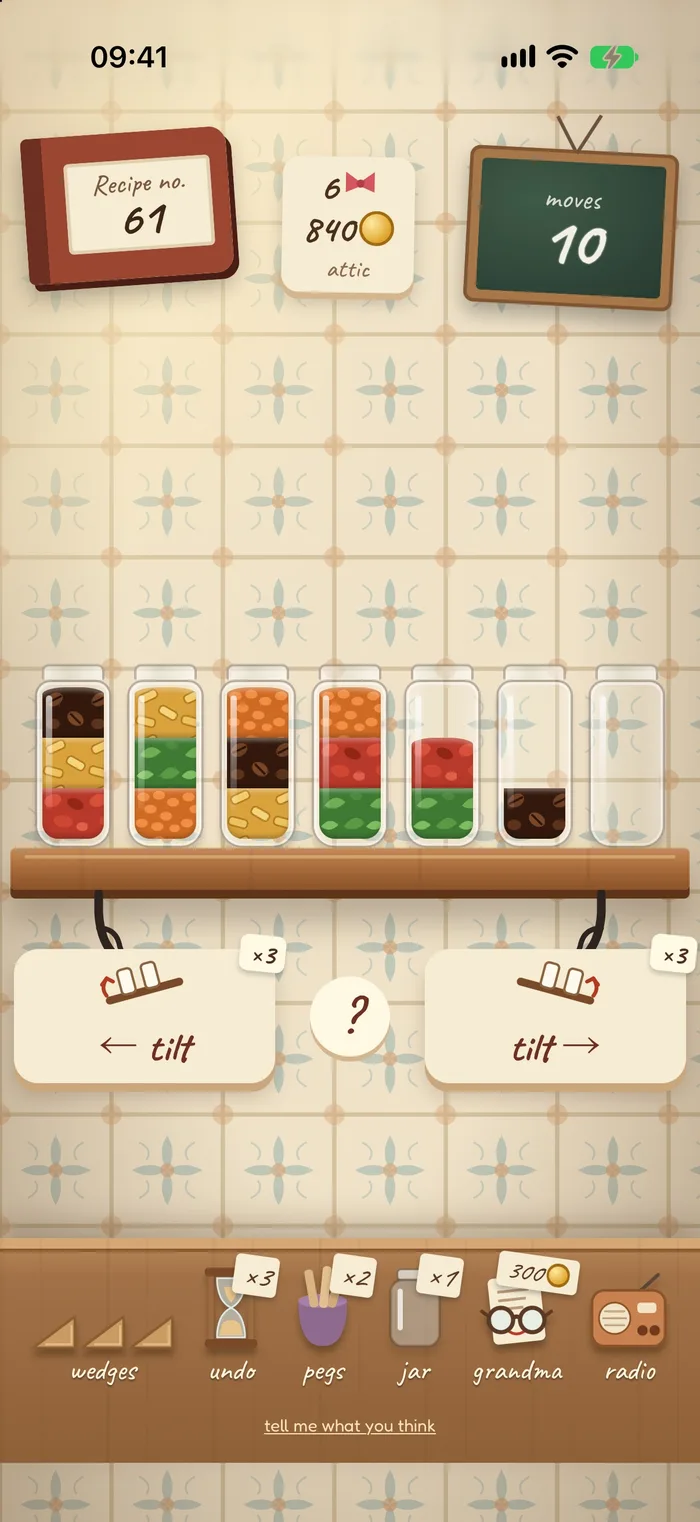
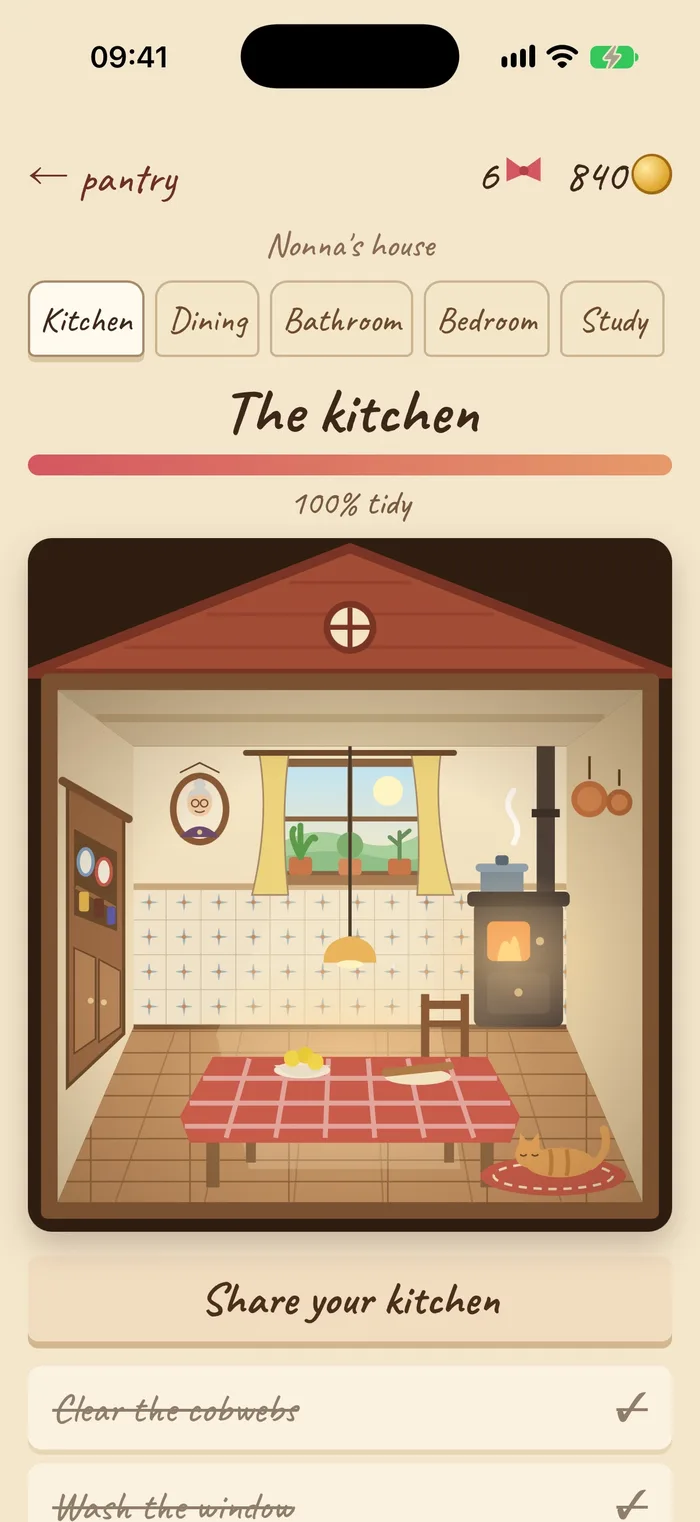
Puzzle screen: jars of layered ingredients on a shelf, with tilt left and tilt right buttons. Grandma's kitchen as a dollhouse scene, with a checklist of tidying tasks below.

A cozy sorting puzzle for phones. Pour layers between jars, tilt the shelf to make them cascade, and restore your grandmother's house one room at a time.

Role
Designed and directed, built with AI-assisted coding
Built with
TypeScript, Vite, Capacitor for iOS and Android
Year
2026
Status
Version 1.0, in TestFlight

Design decisions

  • 134 levels come from a seeded generator. A breadth-first solver checks that each one fits its move limit and, after the first few, that it can't be solved without tilting.
  • Difficulty follows a sawtooth: a gentle run up to level 15, then cycles of seven that open with a harder Sunday recipe.
  • No lives, timers or real money. Running out of moves only restarts the recipe.
  • Grandma's hints come from the solver: she plays the best moves for you and leaves the last one or two for you to find.

Stealth-action prototype

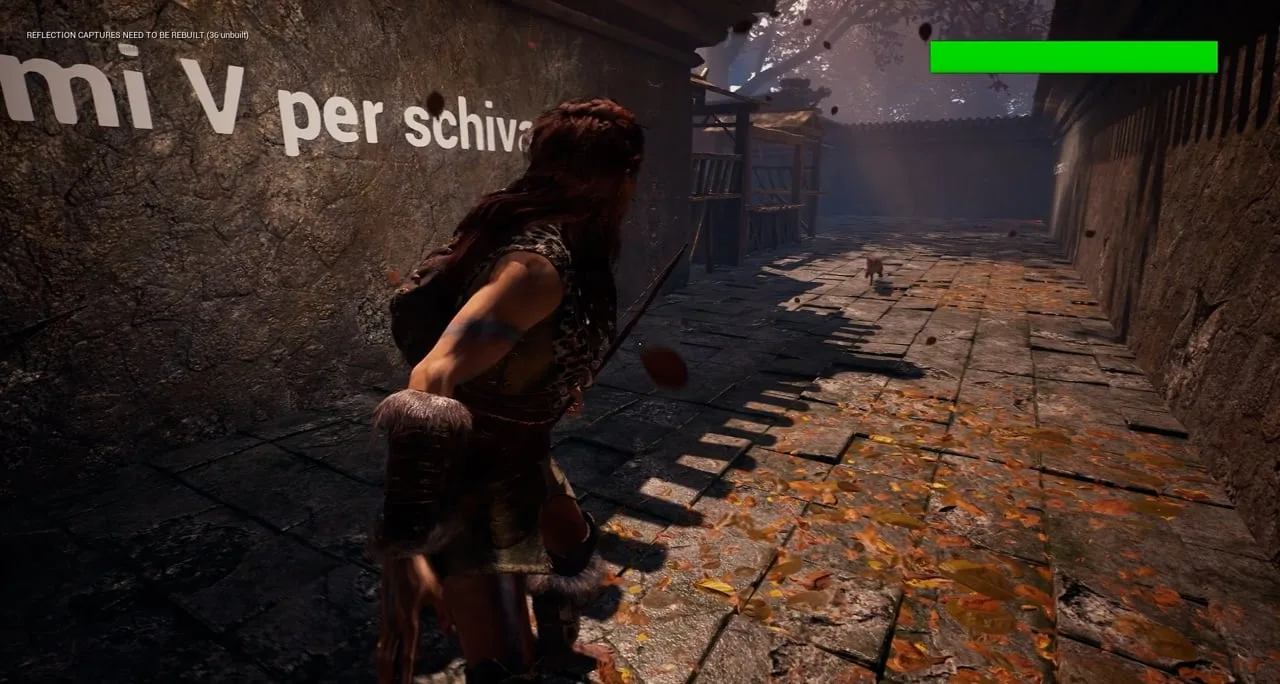
Third-person character with a bow in a dim stealth level.

Third-person stealth with a bow. Final exam for the Tech Animation and Sound Design courses, graded 30/30 in both.

Role
Character logic, Animation Blueprint, audio implementation
Built with
Unreal Engine 5, Wwise
Year
2025

Design decisions

  • A controller that feels heavy but answers instantly: walk, sprint, crouch and dodge as separate states with their own transitions.
  • You can draw, aim and fire the bow while moving, blended in the Animation Blueprint.
  • Audio follows the character's state in Wwise: footsteps change with speed and stance, the bowstring tightens audibly as you draw, and thrown objects make noise that pulls guards away.

More work

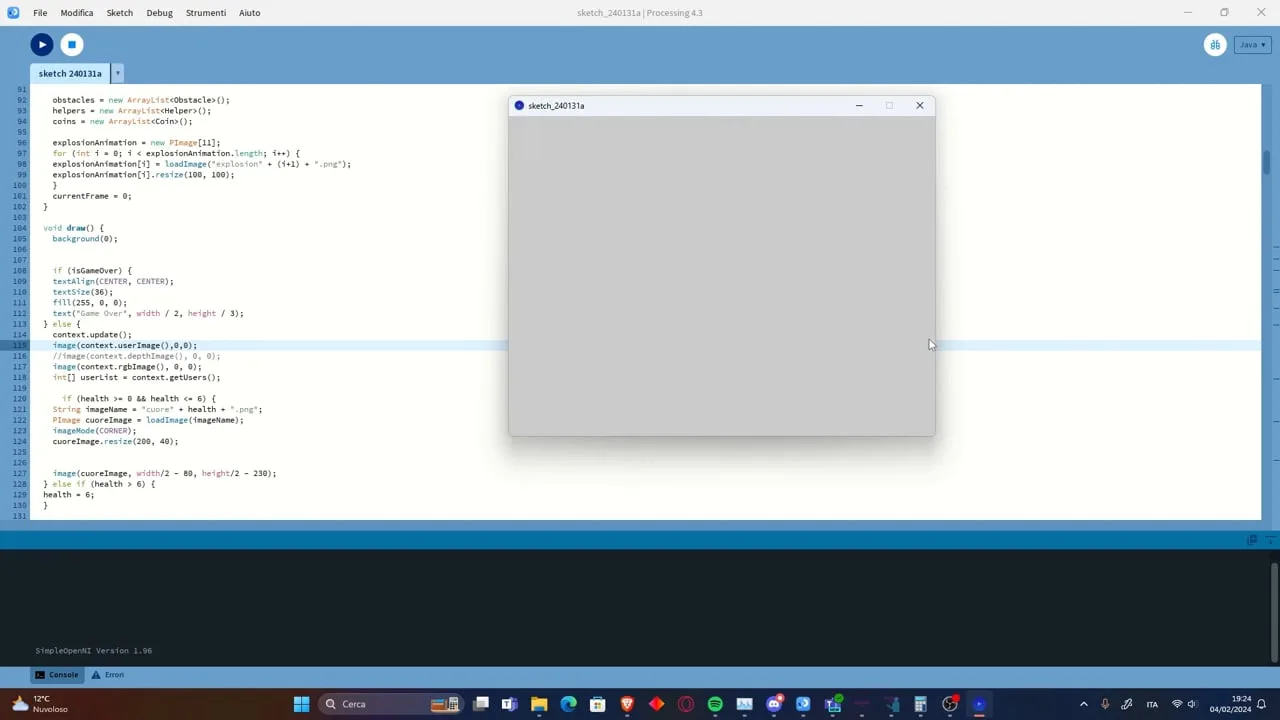
A player in front of a projection, catching falling objects with their hands.

Bombdodge

An arcade game where your body is the controller. A Kinect tracks your hands to catch falling objects and build combos while you dodge bombs. Built with Processing in 2024.

Music

I write and produce my own tracks in FL Studio and Ableton Live. It's where the timing and arrangement ideas in my games start.